By Espino Shower DoorsUpdated 6 min read
Choosing a glass shower door comes down to three main styles. Here's how they compare, in plain terms, so you can pick the right one before you ask for a quote.
Side-by-side comparison
| Frameless | Semi-frameless | Sliding | |
|---|---|---|---|
| Look | Cleanest, all glass | Glass with some metal framing | Glass panels on a track or rollers |
| Glass | Thick tempered, usually 3/8" or 1/2" | Thinner tempered glass | Varies by system |
| Relative cost | Highest | Lower | Low to high, depending on system |
| Cleaning | Easiest, little metal | Some edges to wipe | Track needs regular cleaning |
| Space needed | Room for the door swing | Room for the door swing | No swing, good for tight rooms |
| Best for | Walk-in showers, primary baths | Value-focused upgrades | Tubs and small bathrooms |
Frameless shower doors
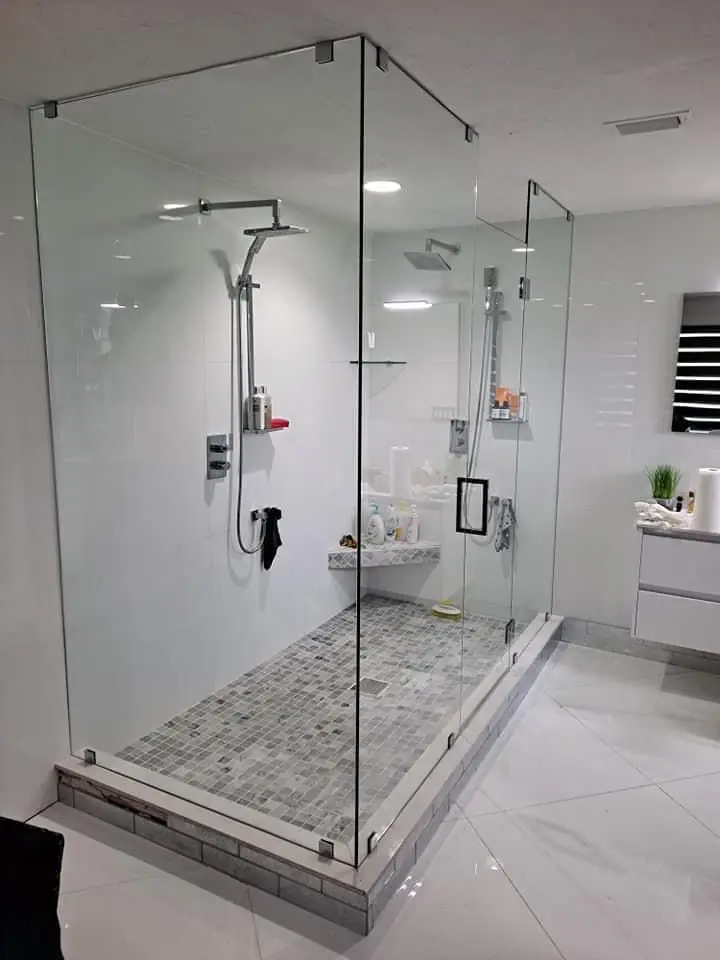
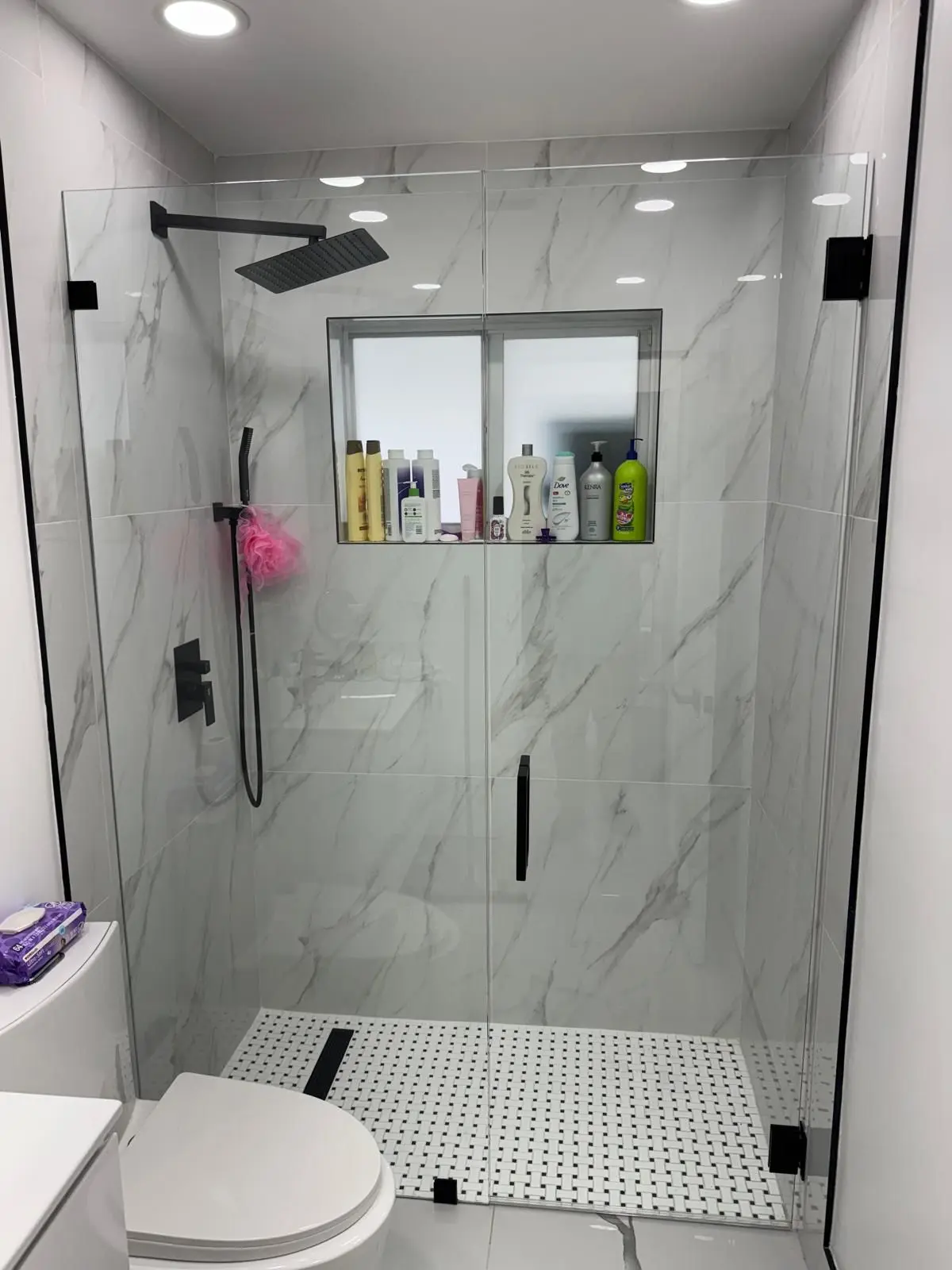
Frameless doors use heavy tempered glass held by hinges and clamps, with no frame around the edges. They make a bathroom look larger and show off tile work. Because there's no frame to hide gaps, they must be measured and installed precisely.
- Pros: clean look, easy to clean, feels high-end.
- Cons: highest cost, needs room for the door to swing.
Semi-frameless shower doors
Semi-frameless doors combine thinner glass with partial metal framing, often around the fixed panels. They look much lighter than old fully framed doors and cost less than frameless.
- Pros: lower cost, partial frame helps contain water.
- Cons: more metal to clean, less minimal look.
Sliding shower doors
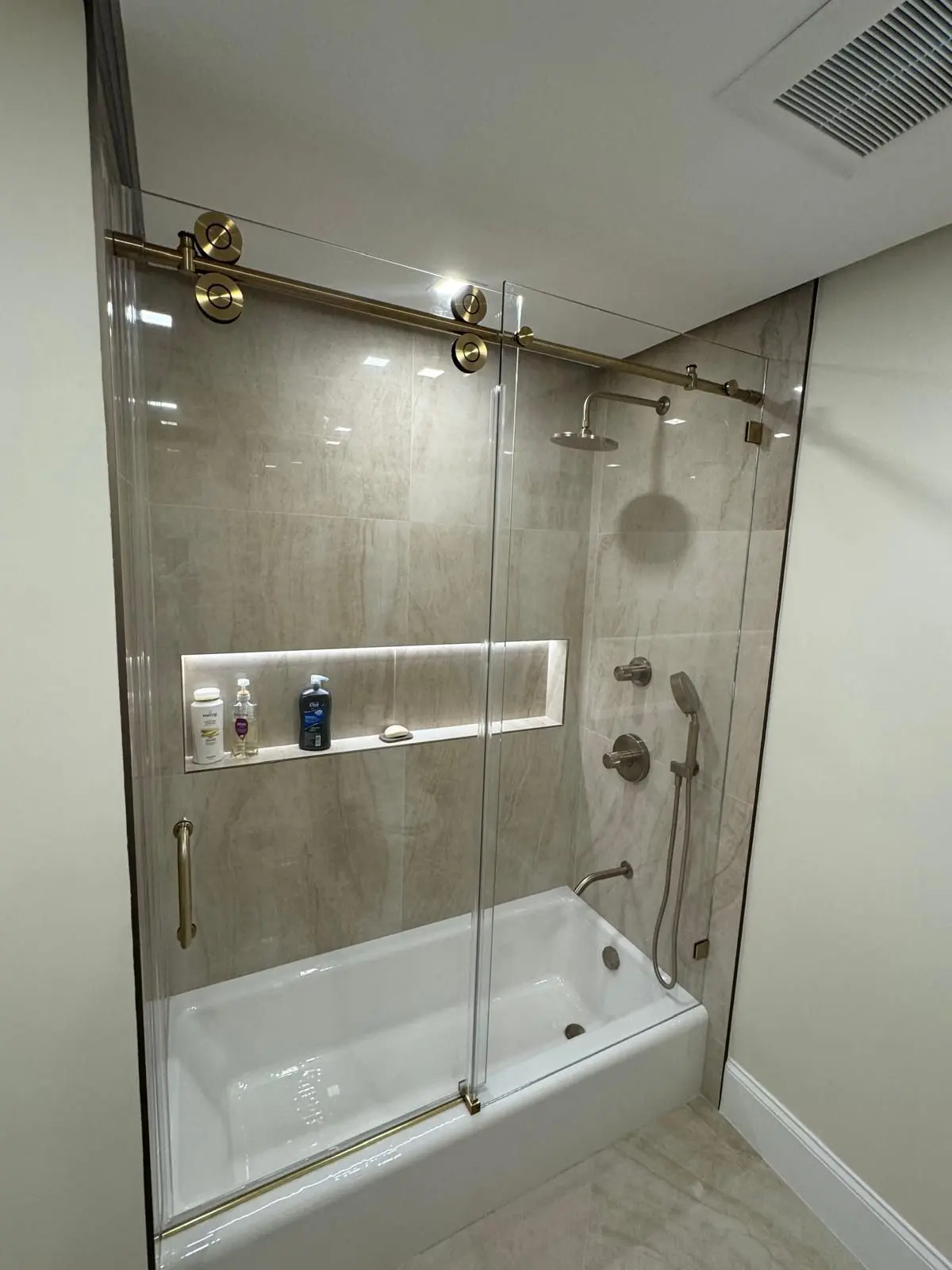
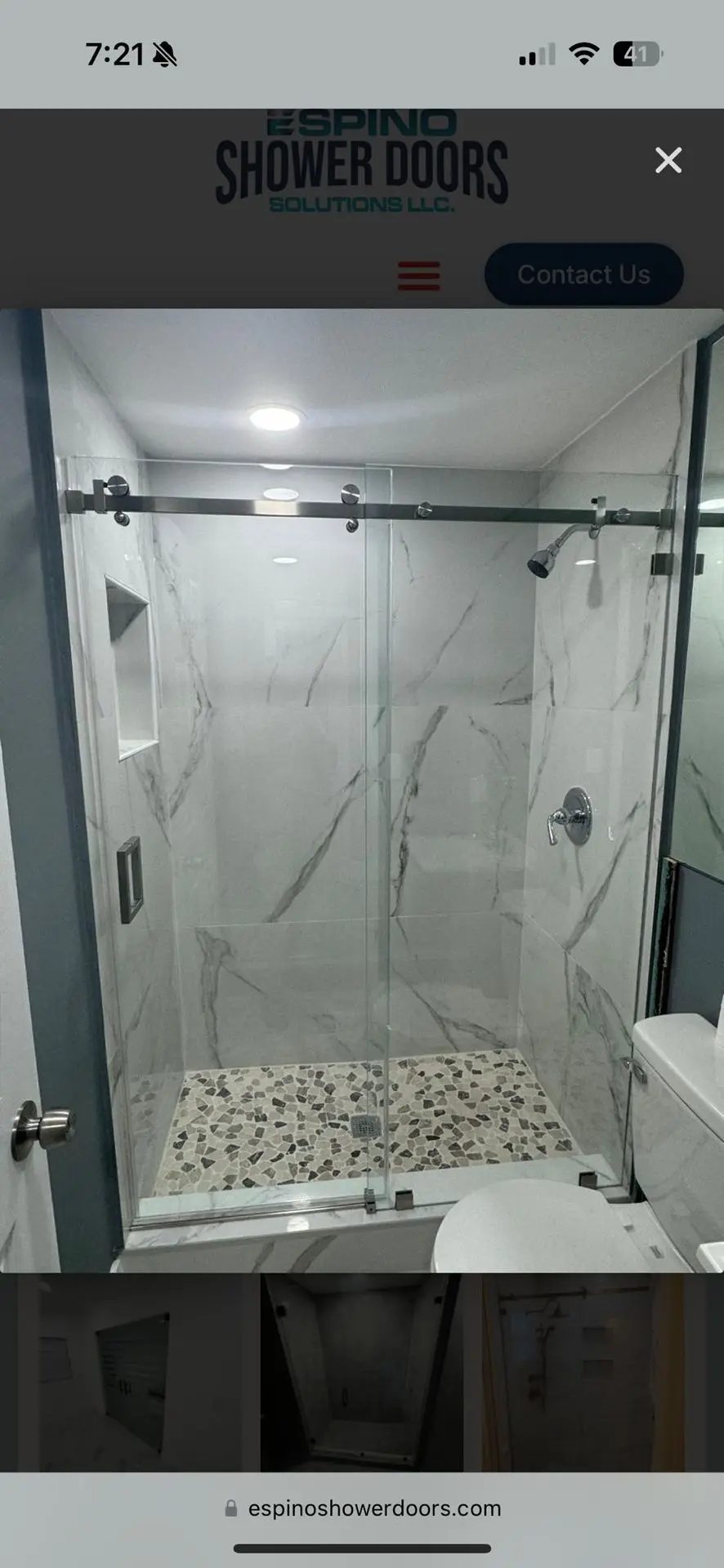
Sliding doors move along a track or exposed rollers instead of swinging out. They're the go-to choice for bathtubs and for bathrooms where a hinged door would hit the toilet or vanity. Frameless sliding systems give a modern look with the same space-saving benefit.
- Pros: no door swing, great for tubs and small rooms.
- Cons: rollers and tracks need cleaning and occasional maintenance.
How to choose
- Measure your clearance. If a door can't swing freely, go sliding.
- Set your budget. Frameless costs most; semi-frameless offers the best value.
- Think about cleaning. Hard water is common in Miami; fewer edges means less scrubbing.
- Match the bathroom. Large walk-in showers suit frameless; tub-shower combos suit sliding.
Still undecided? See what each type costs or book a free estimateand we'll recommend options for your space.